
Northern Lights photography — settings and tips
You don't need a $5,000 setup to photograph the northern lights — but you do need a tripod, manual control and a few small habits that make the difference between blurred green smudges and the shot you came for.
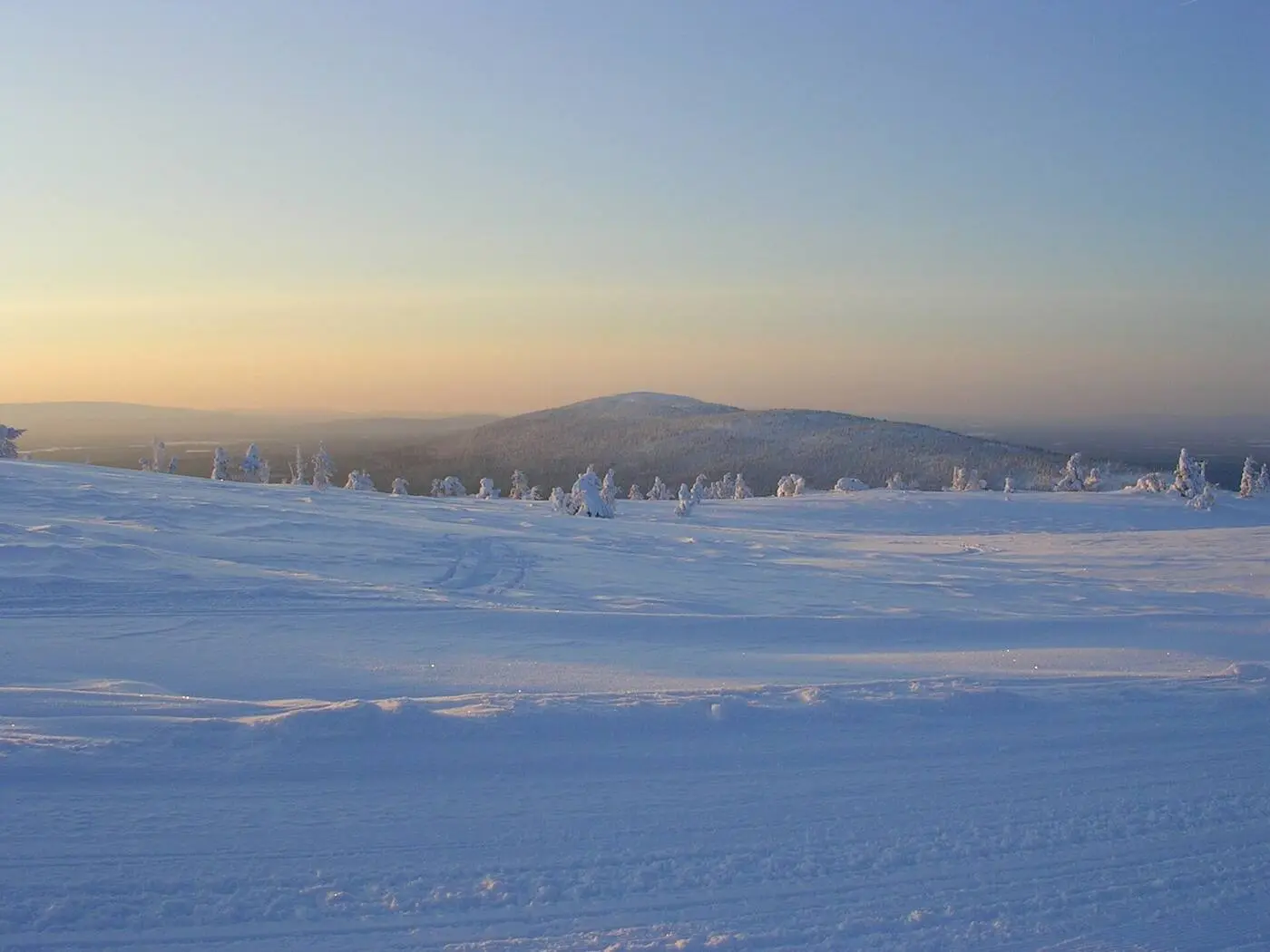
Most modern cameras — and increasingly, modern phones — can capture the aurora well. What stops people getting good shots isn't gear; it's an unfamiliar combination of long exposures, total darkness and very cold hands. This guide gives you the settings that work as a starting point, and the small operational tricks that matter when conditions are working against you.
What you actually need
- A camera with manual mode (mirrorless, DSLR, or a phone with Pro/Manual mode — recent iPhones and Pixels both have one).
- A tripod. Non-negotiable. Even the cheapest travel tripod works. Hand-holding is impossible at the exposures the aurora needs.
- A fast wide-angle lens if you have one. f/2.8 or wider is great; f/4 still works. Focal length 14–24mm full-frame equivalent captures both the lights and a horizon.
- Spare batteries. Cold halves their life — bring three if you'd usually bring one.
- A head torch with a red light mode, so you can change settings without ruining your night vision.
Starting settings
Set the camera to full manual (M). RAW format if your camera offers it. Manual focus, set to infinity (autofocus does not work on a dark sky — focus on a distant light or use Live View, zoom in on a bright star, and adjust until it's a pin-point). Switch off image stabilisation when the camera is on a tripod; it can introduce blur on long exposures.
From there, three settings change with conditions:
- Aperture: as wide as your lens allows. f/2.8 is great, f/4 is fine, f/5.6 starts to need higher ISO and longer exposures.
- Shutter: start at 8 seconds. Faint aurora needs longer (up to 20 seconds); bright, fast-moving displays need shorter (2–4 seconds) or they smear into a green blob.
- ISO: start at ISO 1600. Drop to 800 for very bright displays, push to 3200 for very faint ones. Modern cameras handle ISO 3200 cleanly; older bodies get grainy past 1600.
Phone photography
Recent iPhones (12 Pro and newer) and Pixels (6 and newer) shoot the aurora surprisingly well. The trick is Night Mode plus a tripod — handheld night mode is not enough for moving aurora. With the phone on a tripod (or steadied on a fence post), open the camera, switch to Night Mode, slide the timer up to 10–30 seconds, and tap the shutter. The result won't match a dedicated camera but is genuinely shareable.
Composition
The single biggest improvement most aurora photos need is a foreground. A picture of green sky and nothing else is forgettable. Pictures of green sky over a snowy lake, a lone tree, a log cabin or a frozen river surface are not. Scout your spot before dark if possible. Good Lapland foregrounds:
- Kemijoki river ice in Rovaniemi (the Jätkänkynttilä bridge area)
- The Levi fell viewing terrace looking down across the valley
- Any frozen lake — Lake Inari is famous for a reason
- Snow-covered spruce forest with a path leading the eye in
Cold-weather camera care
- Keep spare batteries in an inside pocket against your body. Swap them when one dies; the cold one revives in your pocket and can be reused.
- Never breathe on the lens. The moisture freezes instantly and ruins the next several shots.
- When you go back inside, leave the camera in a sealed bag or case for at least 30 minutes. Pulling a cold camera into a warm room causes condensation inside the lens that takes hours to clear.
- Use a microfibre cloth to clear any snow flakes — don't wipe with a glove.
- A simple intervalometer or your camera's built-in timer avoids touching the shutter button (which shakes the tripod).
Getting the timing right
Aurora activity is most likely between 9pm and 1am local time, with the peak window roughly 10pm–midnight. Cloud cover matters more than KP index — a KP-3 night under clear sky often beats a KP-6 night under cloud. See our best time to see the northern lights guide for the wider seasonal picture. Apps like My Aurora Forecast and the official FMI service give you a workable short-term outlook.
Where to base for photography
Both Rovaniemi and Levi have excellent dark-sky locations within 20 minutes of the centre. For pure aurora chasing without a car, Levi's fell-top access is hard to beat. Rovaniemi has more frozen-river compositions. Our Rovaniemi vs Levi guide compares them.
Ready to shoot?
Browse our northern lights tours — many include transport to dark-sky locations and a guide who'll help you set up the shot. Or book a private photography tour through our tailor-made service.
Will I see the northern lights?
The straight answer: probably, if you give yourself a few nights — but nobody can promise it. Here is what the odds actually look like, what decides them, and exactly what we do about it.
Month by month, realistically
Likelihood of seeing the aurora at least once on a three-night stay in Finnish Lapland, based on typical season conditions. Solar activity and cloud cover vary every year — treat this as a planning guide, not a forecast.
| Month | Chance over 3 nights | Dark hours | What to expect |
|---|---|---|---|
| September | Moderate · ~50% | ~6 h | Season opens. Mild nights, open water reflections, no snow yet. Frequent cloud from the Atlantic. |
| October | Good · ~60% | ~9 h | Darkness returns fast and equinox activity helps. Wet, changeable weather is the main obstacle. |
| November | Good · ~60% | ~13 h | Long nights, first reliable snow. Cloudy spells are common but gaps open often. |
| December | Moderate · ~55% | ~18 h | Polar night — dark almost round the clock. Also the cloudiest, snowiest month of the season. |
| January | Good · ~65% | ~17 h | Cold, dry, high-pressure nights give the clearest skies of deep winter. Bring serious layers. |
| February | Very good · ~70% | ~14 h | The sweet spot: still very dark, clearer air, deep snow, full activity programme. |
| March | Very good · ~70% | ~10 h | Equinox activity peaks and skies are often crisp. Best all-round month for aurora plus daylight activities. |
| Early April | Moderate · ~45% | ~6 h | Aurora still active, but darkness shrinks quickly. Sunny days, great snow, quieter resorts. |
The season at a glance
Each bar is the same three-night likelihood shown in the table above, plotted so you can compare months quickly. Planning-guide figures, not a forecast.
Chance of at least one sighting over three nights
What actually decides whether you see them
Three things, and only one of them is about the aurora itself. This is why two people in the same town on the same night have completely different trips.
The aurora is above the clouds. On most disappointing nights the lights were there and the sky was simply covered. Cloud is the single biggest factor, and it is local — 40 km can be the difference between overcast and clear.
Street lighting washes out weak displays. From a lit hotel car park you need a strong show to notice anything; from a dark lake or fell 20–30 minutes out of town, a faint arc is already visible to the eye.
One night is a coin toss no matter where you stay. Three nights is when the odds move firmly in your favour, because you only need one of them to break clear.
A faint aurora often reads as a pale grey-green band to the naked eye and only turns vivid green in a long-exposure photo. That is normal physics, not a weak display — and it is why our guides shoot for you.
What we do to maximise your chances
We cannot change the sky, but almost everything else on this list is a decision someone makes on the night.
- Guides check aurora and cloud forecasts through the evening and pick the departure point on the night, not in advance.
- Tours are mobile — if the sky closes in at the first spot, we drive to the nearest gap instead of waiting it out.
- We head away from town light to dark lakes, fells and forest clearings.
- Thermal overalls, boots, gloves and a hot drink so you can stay outside long enough to actually catch a display.
- Small groups, so the vehicle can move quickly when conditions change.
- Late-evening timing that covers the 21:00–01:00 window when activity most often peaks.
- Guides photograph the display for you, so a faint aurora still comes home as a real picture.
Use an aurora alert app while you are here
A good alert app tells you when it is worth stepping outside — useful on the nights you are not on a guided tour.
How aurora alert apps work
Satellites at the L1 point (NASA/NOAA's DSCOVR and ACE) measure the solar wind — its speed, density and the direction of the magnetic field it carries — about 30–60 minutes before it reaches Earth. That data feeds the app.
Finland has a dense network of ground magnetometers. When the aurora energises the sky above, the local magnetic field starts to swing. Apps built for Finland trigger on that local disturbance, which is far more reliable here than a global Kp number alone.
You set a sensitivity level and the app notifies you when activity crosses it, typically minutes before or as a display begins. You can usually set quiet hours so it only wakes you when it is genuinely worth it.
Activity is only half the story. Check the alert against a cloud forecast — if the sky above you is overcast, drive to a gap or wait. The apps show forecast and current conditions to help with exactly that call.
An alert means the aurora is likely active, not that it is visible from where you stand. Clouds, city lights and a bright moon can still hide it — and a quiet reading does not rule out a sudden substorm.
If the aurora doesn't appear
The northern lights are a natural phenomenon. We track the forecasts and take you where conditions look best, but nobody can control solar activity or the weather — and no honest operator can guarantee a sighting. We would rather tell you that up front than sell you a promise nobody can keep.
- There is no sighting guarantee on our aurora tours, and we will never claim one.
- The tour runs as described whether or not the lights appear — the drive, the guiding, the location and the equipment are what you are booking.
- Departures are cancelled for safety reasons, not for a quiet aurora forecast. If we cancel, you are refunded in full.
- Plan two or three aurora nights rather than one. It is the single most effective thing you can do.